Mentoring for Engineering Academia II (07w5030)
Organizers
Robert Gray (Stanford University)
Sheila Hemami (Cornell University)
Eve Riskin (University of Washington)
Rabab Ward (University of British Columbia)
Description
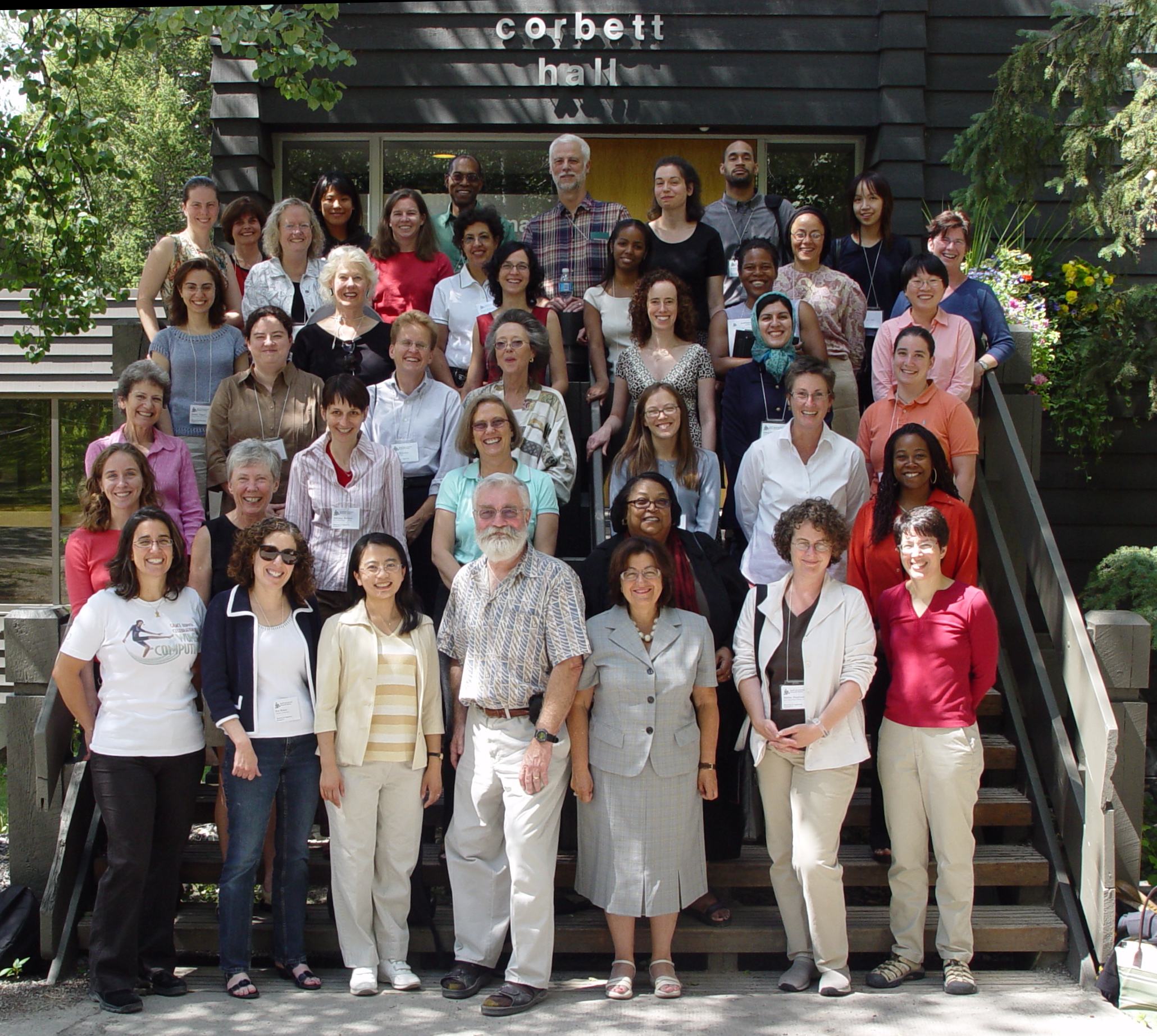
Engineering faculty in North America generally do not represent the diversity of the general population. For example, among major research universities women typically comprise 10% or less of the faculty, and many departments have only one woman or none at all. Recent efforts to improve diversity among students and faculty have been unsuccessful. This trend is particularly troubling given that fewer individuals are seeking engineering careers at a time when technology is increasingly important to the economy and security of nations. The training, encouraging, and mentoring of students and faculty for careers in engineering academia will be the subject of the workshop "Mentoring for Engineering Academia II" at the Banff International Research Station, July 22-27, 2007. Undergraduate and graduate engineering students will join junior, middle, and senior faculty for presentations and discussions on all aspects of developing successful academic careers, with an emphasis on encouraging and ensuring wide and open participation from all segments of the population. Organized by engineering professors from the University of British Columbia, the University of Washington, Cornell University, and Stanford University, participants include a college president, the president of the Institute of Electrical and Electronics Engineers, deans, directors, department chairs, and faculty and students from a variety of engineering programs.
The Banff International Research Station for Mathematical Innovation and Discovery (BIRS) is a collaborative Canada-US-Mexico venture that provides an environment for creative interaction as well as the exchange of ideas, knowledge, and methods within the Mathematical Sciences, with related disciplines and with industry. The research station is located at The Banff Centre in Alberta and is supported by Canada's Natural Science and Engineering Research Council (NSERC), the US National Science Foundation (NSF), Alberta's Advanced Education and Technology, and Mexico's Consejo Nacional de Ciencia y Tecnología (CONACYT).
The Banff International Research Station for Mathematical Innovation and Discovery (BIRS) is a collaborative Canada-US-Mexico venture that provides an environment for creative interaction as well as the exchange of ideas, knowledge, and methods within the Mathematical Sciences, with related disciplines and with industry. The research station is located at The Banff Centre in Alberta and is supported by Canada's Natural Science and Engineering Research Council (NSERC), the US National Science Foundation (NSF), Alberta's Advanced Education and Technology, and Mexico's Consejo Nacional de Ciencia y Tecnología (CONACYT).