Statistical methods for High-throughput Genetic Data (07w5023)
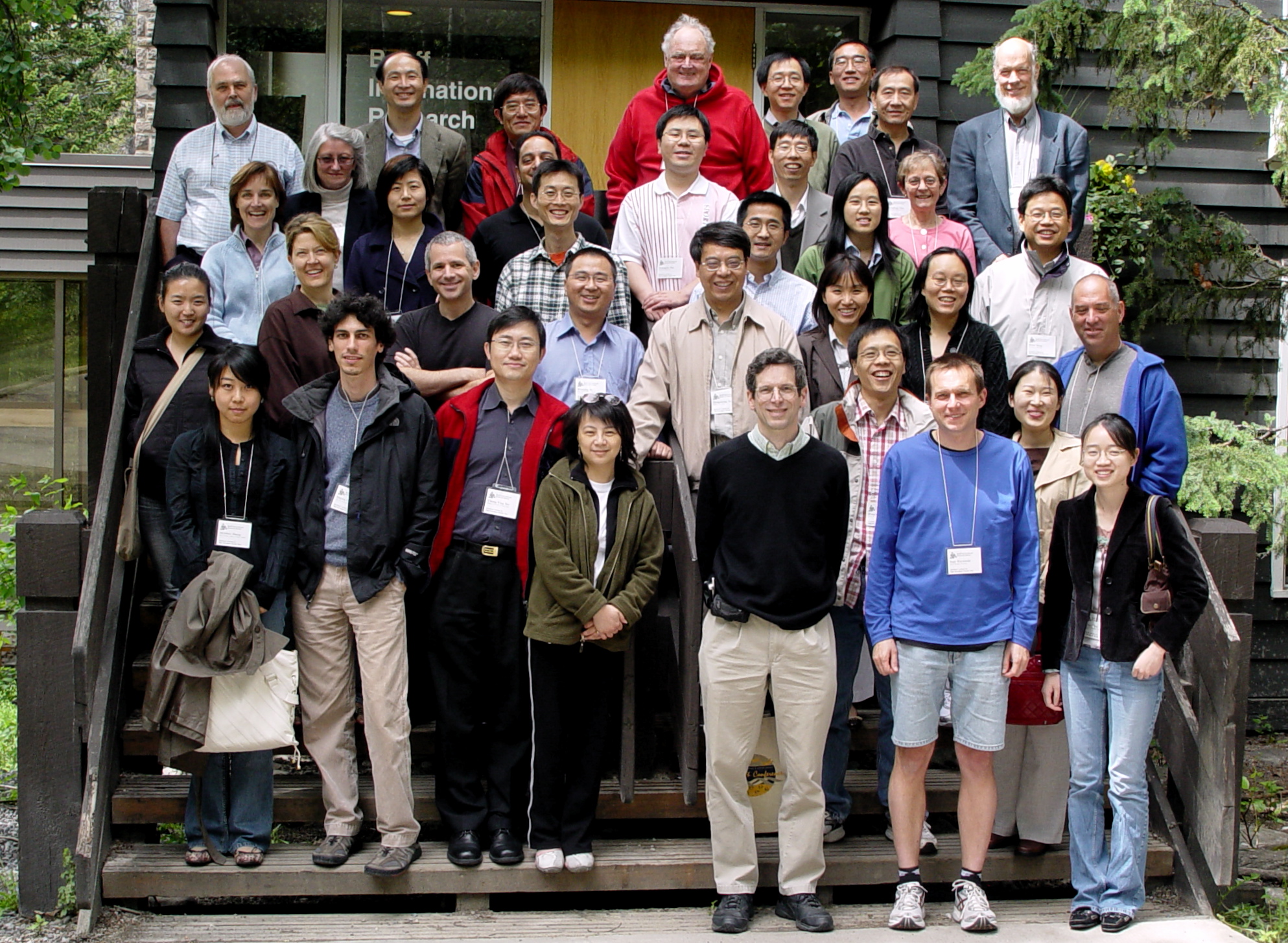
Organizers
Jiahua Chen (University of British Columbia)
Yuejiao Cindy Fu (York University)
Mary Lesperance (University of Victoria)
David Siegmund (Stanford University)
Heping Zhang (Yale University)
Hongyu Zhao (Yale University)
Description
From Mendel's agricultural experiments on peas to human genome projects on chromosomes, geneticists as well as the general public have been fascinated by factors that inherently define the vastly diverse characters of the living world. While only most obvious traits such as the color of flowers were observed in the old days, modern techniques enable geneticists to measure hundreds of thousands of genes of an organism on a single microarray chip. A high amount of high-throughput data are thus generated routinely. The task of identifying important genes out of tens
of thousands, which are associated with traits such as cancer and diabetes, demands serious effort in designing effective statistical analysis procedures.
From June 24 -29, 2007, a group of statisticians/geneticists from all over the world will come to Banff International Research Station to exchange ideas and report their advances on the analysis of high-throughput data. This event is co-organized by Professor Jiahua Chen from the University of Waterloo, who has recently been awarded the tier I Canada Research Chair in Statistical Genetics at the University of British Columbia. Other organizers include Professor Mary Lesperance from the University of Victoria, Professor Yuejiao Fu from York University, Canada; Professor David Siegmund from Stanford University who is a member of the National Academy of Sciences in the USA and renowned for his advanced research in statistical genetics; and Professors Heping Zhang and Hongyu Zhao from the School of Public Health, Yale University.
Professor Heping Zhang is director of the Collaborative Center for Statistics in Science, and Professor Hongyu Zhao is the director of the Center for Statistical Genomics and Proteomics.
The Banff International Research Station for Mathematical Innovation and Discovery (BIRS) is a collaborative Canada-US-Mexico venture that provides an environment for creative interaction as well as the exchange of ideas, knowledge, and methods within the Mathematical Sciences, with related disciplines within the industry. The research station is located at The Banff Centre in Alberta and is supported by Canada's Natural Science and Engineering Research Council (NSERC), the US National Science Foundation (NSF), Alberta's Advanced Education and Technology, and Mexico's Consejo Nacional de Ciencia y Tecnologa (CONACYT).
of thousands, which are associated with traits such as cancer and diabetes, demands serious effort in designing effective statistical analysis procedures.
From June 24 -29, 2007, a group of statisticians/geneticists from all over the world will come to Banff International Research Station to exchange ideas and report their advances on the analysis of high-throughput data. This event is co-organized by Professor Jiahua Chen from the University of Waterloo, who has recently been awarded the tier I Canada Research Chair in Statistical Genetics at the University of British Columbia. Other organizers include Professor Mary Lesperance from the University of Victoria, Professor Yuejiao Fu from York University, Canada; Professor David Siegmund from Stanford University who is a member of the National Academy of Sciences in the USA and renowned for his advanced research in statistical genetics; and Professors Heping Zhang and Hongyu Zhao from the School of Public Health, Yale University.
Professor Heping Zhang is director of the Collaborative Center for Statistics in Science, and Professor Hongyu Zhao is the director of the Center for Statistical Genomics and Proteomics.
The Banff International Research Station for Mathematical Innovation and Discovery (BIRS) is a collaborative Canada-US-Mexico venture that provides an environment for creative interaction as well as the exchange of ideas, knowledge, and methods within the Mathematical Sciences, with related disciplines within the industry. The research station is located at The Banff Centre in Alberta and is supported by Canada's Natural Science and Engineering Research Council (NSERC), the US National Science Foundation (NSF), Alberta's Advanced Education and Technology, and Mexico's Consejo Nacional de Ciencia y Tecnologa (CONACYT).