Inverse Problems: Recent Progress and New Challenges (08w5065)
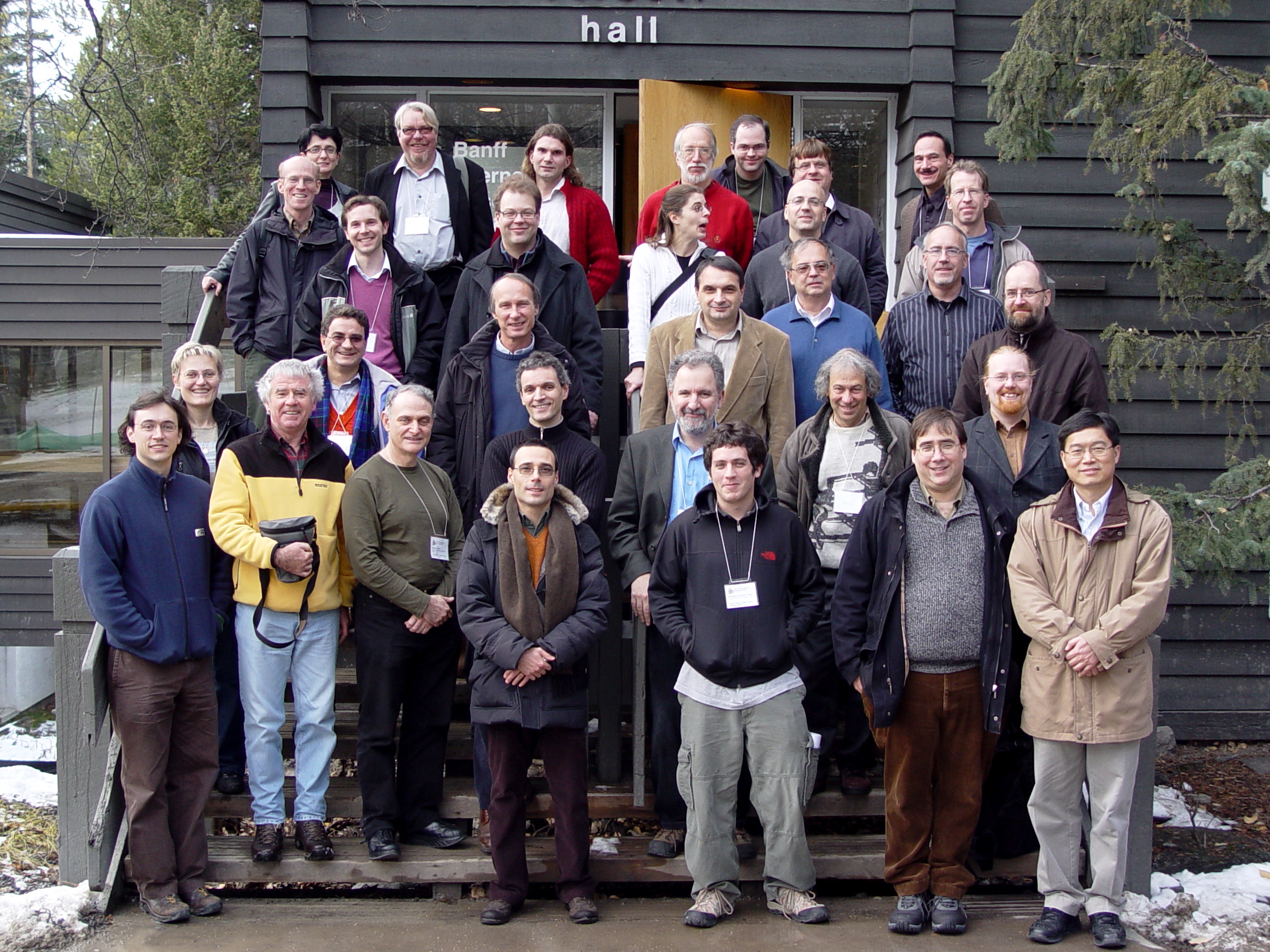
Description
Inverse problems lie at the heart of scientific inquiry and technological development. Progress in science and applied mathematics has brought about increasingly accurate models of observed phenomena. In order to use these models for prediction, one needs first to determine the parameters of the models. A similar situation arises in engineering, where one needs to set parameter values of a system to meet certain performance objectives. Inverse problems can be viewed as the process of determining parameters of a model which match observed data or meet a design objective. The workshop brings together scientists working in the forefront of the subject of inverse problems to address new challenges arising in this field. One goal in this workshop is to create interdisciplinary teams to work on inverse problems which potentially have great impact in development of new technology.
The Banff International Research Station for Mathematical Innovation and Discovery (BIRS) is a collaborative Canada-US-Mexico venture that provides an environment for creative interaction as well as the exchange of ideas, knowledge, and methods within the Mathematical Sciences, with related disciplines and with industry. The research station is located at The Banff Centre in Alberta and is supported by Canada's Natural Science and Engineering Research Council (NSERC), the US National Science Foundation (NSF), Alberta's Advanced Education and Technology, and Mexico's Consejo Nacional de Ciencia y Tecnología (CONACYT).