Causal Inference in Statistics and the Quantitative Sciences (09w5043)
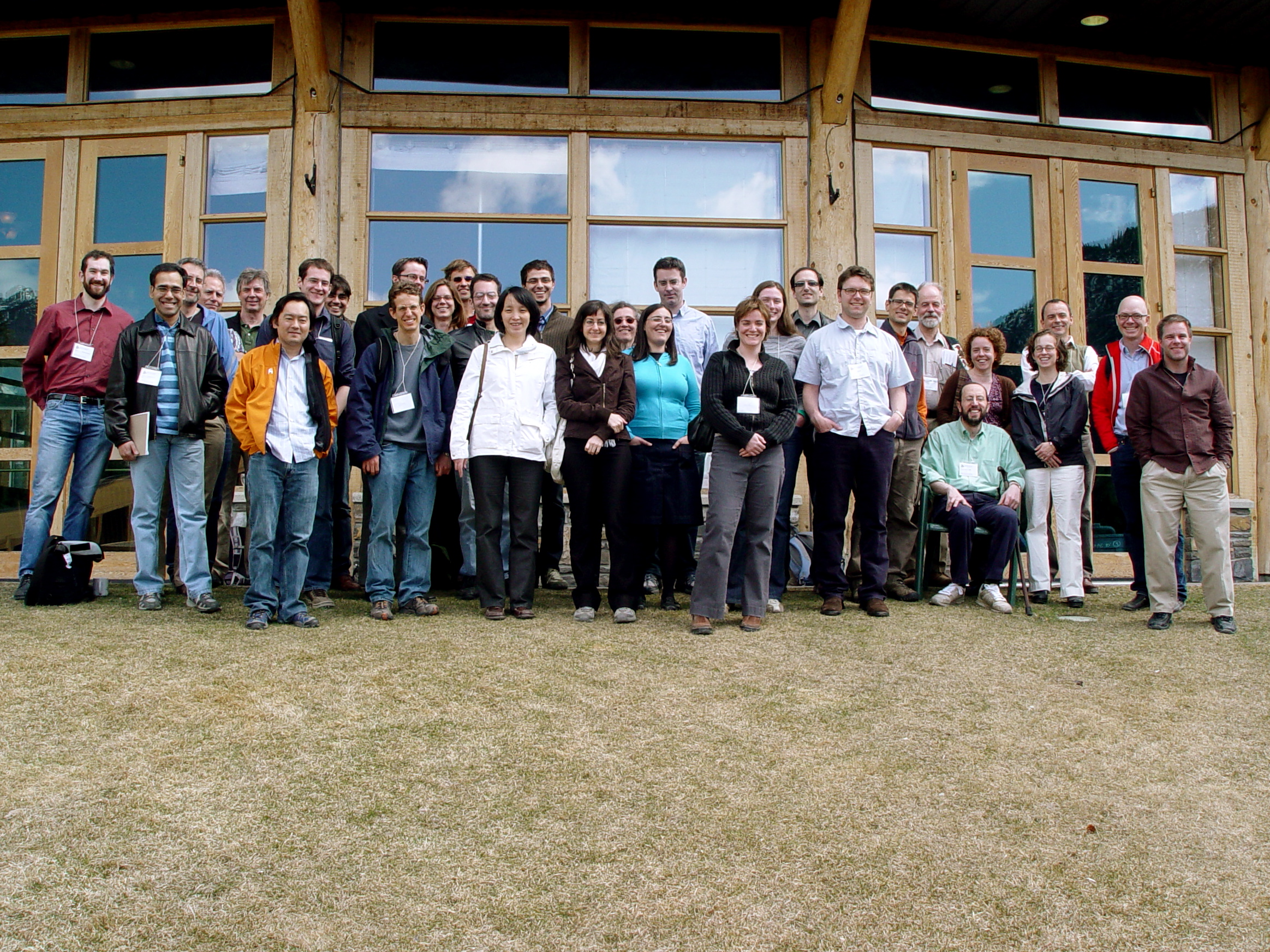
Arriving Sunday, May 3 and departing Friday May 8, 2009

Organizers

Erica E M Moodie (McGill University)
David Stephens (McGill University)

Objectives

OBJECTIVES:


Causal inference attempts to uncover the structure of the data and eliminate all non-causative explanations for an observed association. The goal of most, if not all, statistical inference is to uncover causal relationships. However it is not in general possible to conclude causality from a standard statistical inference procedure, it is merely possible to conclude that the observed association between two variables is not due to chance. Statistical inference procedures do not provide any information about which variable causes the other, or whether the apparent relationship between the two variables is due to another, confounding variable. The explicit study of causation was first introduced into the statistical sciences in 1986 by Paul Holland. Since then, there has been an explosion of research into the area in a variety of disciplines including statistics (particularly biostatistics), computer science, and economics. Despite this, there is relatively little research into causal inference in Canada.

The purpose of this inter-disciplinary workshop is threefold: First, to review recent advances in the causal inferences in statistic; Secondly, to bring together researchers from related fields, in particular Economics and Computer Sciences, who work on causal inference methodology so that we may share approaches and knowledge; and finally, to increase the profile of causal inference amongst statisticians in Canada.

The overall theme of the workshop is causal inference in statistics. Each of the five days of the workshop will focus on a particular sub-theme. In particular, talks and discussions will concentrate on

1. Inference and asymptotic theory

2. Balancing scores and inverse weighting: advances in biostatistics

3. Instrumental variables and structural equation models: connecting statistics and econometrics

4. Adaptive treatment regimes: connecting statistics and computer science

5. Bayesian causal inference: connecting disciplines within statistics


RELEVANCE:


The literature on causal inference is growing rapidly, with many exciting advances under development. This workshop will bring together researchers from a variety of fields, all focused on new methods for estimating causal effects.

Inference and asymptotic theory


The first morning of the workshop will open with a talk introducing causal inference in the statistical sciences (with a focus on the counterfactual framework). This will be followed by talks presenting an overview of the methodological challenges and recent advances in statistical theory.

Balancing scores and inverse weighting: advances in biostatistics


The fundamental objective of causal inference is to balance the treatment groups so that the treated and untreated subjects are comparable with respect to confounding variables. There are two common approaches to achieving this balancing that are frequently employed in biostatistics. The first relies on modeling the probability of receiving treatment, so that comparisons between treatment groups may be made within strata of subjects who have similar profiles with respect to their likelihood of treatment exposure. Adjustment for the probability of receiving treatment is typically accomplished by weighted regression (Marginal Structural Models), adjustment in a regression model or matching (propensity scores).

The second approach to causal comparisons is most relevant in the context of clinical trials. This approach aims to identify subjects who have complied with their randomly assigned treatment allocation and to compare response between treated and untreated subjects within strata of subjects who have similar profiles with respect to their likelihood of complying with the assigned treatment.

The second day of the workshop will focus on new developments and extensions of balancing scores and weighting methods.

Instrumental variables and structural equation models: connecting statistics and econometrics

As in the health sciences, economists are typically interested in causal relationships such determining whether a particular training program increases income. Many important methods of causal inference including the instrumental variables approach to analysis and the Generalized Propensity Score – an extension of the traditional propensity score that facilitates the estimation of dose-response relationships -- were developed by economists. These methods are particularly useful and are generally unused by statisticians, and will be discussed on the third day of the workshop.

Adaptive treatment regimes: connecting statistics and computer science


The fourth day of the workshop will focus on adaptive treatment regimes. Estimating the best sequence of treatment regime for a chronic illness such as hypertension or cancer presents many statistical challenges. In many such diseases, the potential for microbial resistance, toxic side-effects, and compliance with treatment over time can complicate the ability to decide when and how to recommend treatment changes. Typically, the individual tailoring of treatments has been done at the clinical level on an ad-hoc or experience-driven basis at the physician\'s discretion, and is not based on statistical evidence.
The area of dynamic (or adaptive) treatment regimes, pioneered in the statistics literature by Dr. Susan Murphy and Dr. James Robins, attempts to formalize the estimation of optimal decision rules for treatment over time, specific to time-varying patient characteristics.
Sequential decision making problems such as the estimation of optimal adaptive treatment regimes have also been considered in the computer sciences, through methods in artificial intelligence, reinforcement learning, and control theory.

Bayesian causal inference: connecting disciplines within statistics


There has been little attention given to causal approaches such as marginal structural models in the Bayesian communities. Many of the methods of causal inference including regression on propensity scores, marginal structural models, and instrumental variables require two-step approaches in which a number of nuisance parameters much be estimated. A Bayesian approach would allow for cohesive propagation of the uncertainty in the models.

In the final day of the workshop, Bayesian methods will be discussed, particularly with reference to multi-level models. The workshop will conclude with David Stephens, co-organizer of the work-shop, presenting an overview of Bayesian views on causal inference including Bayesian applications of instrumental variables, propensity scores, and Generalized Propensity Scores.


TIMELINE:

Each half-day, we will schedule four 30 minute talks, followed by a 45 minute discussion period. The talks for each day will be centered about one of the five sub-themes listed in the objectives above.

We have contacted approximately half of the listed potential participants and have received overwhelmingly positive responses from researchers working in all aspects of causal inference. Interest in speaking at the workshop has been confirmed by 2-4 researchers for each of the days/sub-themes, including leaders in the fields of statistics (e.g., Drs. Marshall Joffe, James Robins, and Susan Murphy), economics and public policy (Drs. Alberto Abadie, Anthony Lancaster, and Guido Imbens), and computer science (Dr. Joelle Pineau).