Mathematical Methods in Emerging Modalities of Medical Imaging (09w5017)
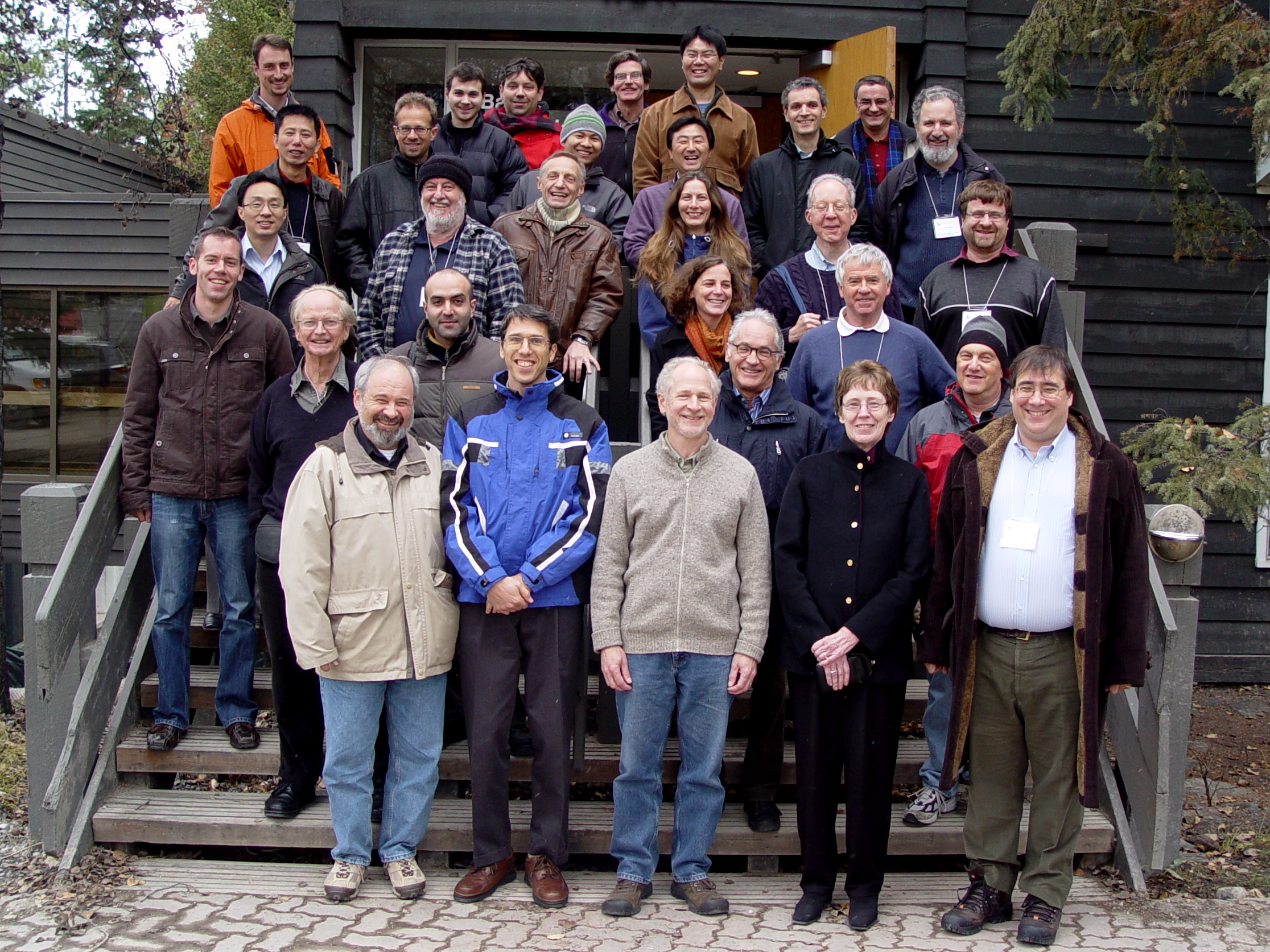
Organizers
David Finch (Oregon State University)
Peter Kuchment (Texas A&M University)
John Schotland (University of Pennsylvania)
Yuan Xu (Ryerson University)
Description
Medical diagnostic imaging, since the invention of the first medical scanner by Allan M. Cormack and Godfrey N. Hounsfield 40 years ago, which brought in 1979 the Nobel Prize in medicine to its inventors, has relied heavily upon sophisticated mathematical methods. Without those, essentially no medical or industrial tomography could exist. The mathematical toolbox that is needed involves various techniques of contemporary mathematical analysis, as well as of discrete and numerical mathematics. The successes of X-ray CT scan, MRI, and other well developed methods are widely known. However, requirements to
medical imaging are diverse and hard (almost impossible) to satisfy in a single method. Among them are safety for patients and practitioners, low cost, high contrast, high resolution, etc. This is what has triggered recent attempts of
developing novel methods. Most of those are not at the stage of clinical implementation yet, but rather under intensive research and development. One can name, for instance, various types of optical tomography, phase contrast CT, thermo/photoacoustic tomography, elastography, electrical impedance tomography, ultrasound modulated optical tomography, and several others.
The workshop will assemble leading researchers from mathematics, physics, engineering and medicine interested in developing and implementing mathematical methods of novel medical diagnostic imaging, as well as junior scientists entering this exciting field. The goal is to formulate the mathematical problems that must be resolved to meet outstanding challenges of this young and fast developing area and to assess and facilitate the current progress in these directions. It is expected that meeting of such a group and the resulting creative discussions will lead to faster advances in this area, which is crucial for medicine, as well for industrial non-destructive evaluation and and geological prospecting.
The Banff International Research Station for Mathematical Innovation and Discovery (BIRS) is a collaborative Canada-US-Mexico venture that provides an environment for creative interaction as well as the exchange of ideas, knowledge, and methods within the Mathematical Sciences, with related disciplines and with industry. The research station is located at The Banff Centre in Alberta and is supported by Canada's Natural Science and Engineering Research Council (NSERC), the US National Science Foundation (NSF), Alberta's Advanced Education and Technology, and Mexico's Consejo Nacional de Ciencia y Tecnología (CONACYT).